$0.00


Introduction
Singapore’s tropical climate brings year-round humidity and intense rainfall, creating ideal conditions for water seepage to develop within structural elements. In many properties, seeps through porous materials, joints, and hairline cracks, often unnoticed until visible signs appear.
Unlike sudden leaks, water seepage worsens gradually. It creeps through wall junctions, roof membranes, concrete pores, plumbing interfaces, or basement retaining walls. The seepage only becomes apparent when damp patches, stains, bubbling paint, or surface discolouration start to show. By the time these symptoms emerge, moisture may have already compromised surrounding materials.
When left unaddressed, water seepage weakens structural components, corrodes steel reinforcements, and encourages mould or fungal growth. This not only affects the appearance of common areas and tenanted spaces but also poses health concerns and contributes to persistent musty odours. In more severe cases, moisture ingress can lead to electrical hazards, surface delamination, and disruptions that impact tenancy satisfaction or operational continuity.
For MCSTs, commercial property managers, and facility teams, even minor signs of water seepage should never be ignored. Early detection and timely intervention are crucial to safeguarding structural integrity, preventing costly reinstatement works, and protecting the long-term value of the asset.
Accurate diagnosis is essential. Temporary patchwork may mask symptoms, but only a professional assessment can pinpoint the true source of the problem. With over 40 years of industry experience, Ample Building Services, BCA-registered and ISO-certified, provides reliable solutions that identify the root cause, restore affected areas, and implement measures that prevent future moisture intrusion in Singapore’s built environment.
Key Takeaways:
What are the earliest signs of water seepage that property managers should watch for?
Early indicators include damp patches, discolouration, peeling paint, efflorescence, musty odours, mould growth, and recurring stains after rainfall. These symptoms suggest hidden moisture ingress that requires prompt attention.
How does water seepage impact structural safety, indoor air quality, and long-term asset value?
If ignored, moisture weakens concrete, corrodes reinforcement bars, and leads to spalling. It also promotes mould growth, causing poor indoor air quality and potential health issues. Aesthetically, stains and odours reduce overall property value and tenant satisfaction.
Why is timely inspection and preventive building upkeep essential in Singapore’s humid climate?
Singapore’s high humidity accelerates moisture retention. Regular inspections help detect weak points early, reducing repair costs and preventing small issues from escalating into major structural concerns.
Which maintenance practices help reduce the risk of recurring water seepage in residential and commercial buildings?
Routine cleaning of gutters and drains, scheduled façade checks, regular application of waterproof coatings, and consistent monitoring of roofs, balconies, and wet areas help maintain a watertight building envelope.
What qualities should MCSTs and property managers look for when choosing a reliable contractor to handle water seepage issues?
A dependable contractor should be BCA-registered, BizSAFE-certified, experienced in managing MCST and commercial properties, and capable of providing integrated waterproofing, repair, and reinstatement services. Clear communication, detailed scopes of work, and warranty coverage are also essential.
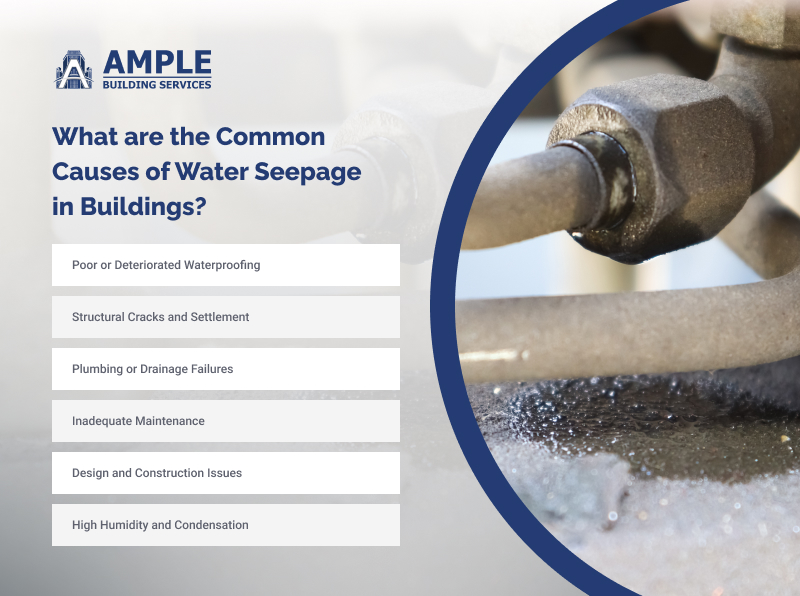
What are the Common Causes of Water Seepage in Buildings?
Understanding the root causes of water seepage is essential for MCSTs and property managers responsible for maintaining safe, functional, and compliant buildings. In Singapore’s weather conditions, several factors contribute to recurring moisture intrusion across residential, commercial, and mixed-use properties.
2.1. Poor or Deteriorated Waterproofing
Ageing or improperly installed waterproof membranes remain one of the most common causes of water seepage. Roofs, balconies, and wet areas such as toilets rely heavily on effective waterproofing to prevent moisture from migrating into the structure. When membranes are applied using low-quality materials or without proper detailing, premature failure is likely.
Singapore’s intense wet-dry cycles cause expansion and contraction of these layers, eventually leading to cracks, gaps, and weakened adhesion. Once this protective barrier fails, water seepage begins to form within the underlying concrete or finishes.
2.2. Structural Cracks and Settlement
Hairline cracks in concrete or masonry walls provide direct pathways for moisture to enter, making structural movement a key contributor to water seepage. Natural settlement, temperature fluctuations, or uneven workmanship can gradually widen these cracks.
During periods of heavy rainfall, these openings allow more water to penetrate, resulting in internal dampness, peeling paint, and progressive deterioration if not addressed promptly.
2.3. Plumbing or Drainage Failures
Hidden plumbing defects are another major cause of water seepage. Leaks from concealed pipes, rainwater downpipes, or floor traps often lead to localised damp patches that worsen over time.
Blocked or poorly maintained drainage systems also cause water to pool on roofs, planter boxes, and balconies. This increases hydrostatic pressure against the building envelope and accelerates moisture ingress into adjoining units.
2.4. Inadequate Maintenance
Many properties adopt a reactive approach instead of a preventive one, allowing minor issues to escalate into significant water seepage problems. Uncleaned gutters, damaged roof tiles, deteriorated sealants, and neglected expansion joints create opportunities for moisture to infiltrate unnoticed.
Routine inspections, timely resealing, and proactive upkeep play a vital role in preventing repeated occurrences.
2.5. Design and Construction Issues
Poor design and construction detailing can create long-term vulnerabilities that lead to water seepage. Inadequate slope on roofs or balconies prevents proper water runoff, causing water to accumulate in low-lying areas.
Weak detailing around junctions, parapet walls, and service penetrations also forms potential ingress points. Without waterproofing continuity between horizontal and vertical surfaces, moisture finds its way through the smallest openings.
2.6. High Humidity and Condensation
Singapore’s naturally high humidity levels can mimic or worsen water seepage issues. In air-conditioned spaces, condensation forms on cool concrete walls, ceilings, and ducts when warm air meets chilled surfaces.
Though not always caused by rainwater, the resulting dampness encourages mould, staining, and odours, similar to the effects of true seepage.
Recognising and Addressing Seepage Problems in Buildings
Identifying signs of water seepage early allows MCSTs and property managers to take targeted action before the problem spreads. A well-maintained property depends heavily on proactive building maintenance, especially in Singapore’s humid climate where moisture intrusion can escalate quickly without timely intervention.
3.1. Early Warning Signs of Seepage
The earliest indications of water seepage are often subtle and may resemble ordinary wear and tear. Damp or discoloured patches on walls and ceilings typically suggest moisture trapped behind paint or plaster layers.
As water seepage progresses, bubbling, peeling, or flaking paint may appear near windows, tiled areas, plumbing points, or ceiling edges. A musty indoor environment or persistent odours further hint at concealed moisture build-up.
Efflorescence, the white, powdery residue on brick or concrete, reveals that water is migrating through structural materials. Mould and mildew growth in corners, bathrooms, or poorly ventilated areas indicate prolonged dampness and may require targeted wall dampness treatment.
Rust stains on metal frames, hinges, or reinforcement bars signal long-term exposure to moisture. If stains reappear shortly after rain or washing, it suggests ongoing infiltration that will eventually require professional water seepage repair to prevent further deterioration.
3.2. How Seepage Affects Building Safety and Value
Ignoring early symptoms of water seepage can undermine both structural integrity and asset value. Continuous moisture exposure weakens concrete, corrodes steel reinforcement, and reduces load-bearing capacity. This leads to cracks, de-lamination, and even spalling concrete, which often requires specialised spalling concrete repair in Singapore to restore safety. Damp conditions also encourage mould, bacteria, and fungal growth, negatively impacting indoor air quality.
Occupants may experience respiratory discomfort, sinus irritation, and allergies when dampness persists. From an aesthetic standpoint, stained walls, peeling finishes, and odours diminish the appeal of both residential units and commercial spaces. Properties with recurring water seepage issues face more complaints from residents or tenants, potentially reducing rental value and long-term marketability.
3.3. Safety and Compliance Concerns
Water seepage becomes hazardous when it occurs near electrical systems, wiring, sockets, or switchboards, increasing the risk of short circuits or electrocution.
Under the Building Maintenance and Strata Management Act (BMSMA), MCSTs and property managers are responsible for ensuring common property remains safe and watertight. Regular checks, such as a periodic façade inspection (PFI), help detect vulnerabilities before they escalate.
Failure to address persistent water seepage may expose councils or owners to compliance issues, legal liabilities, or insurance complications. Moisture spreading between units can also lead to inter-floor disputes, claims, and the need to engage a qualified water leakage contractor in Singapore for proper assessment.
3.4. Escalating Repair Costs Over Time
Minor water seepage concerns are generally simple and cost-efficient to fix when detected early. However, delays allow moisture to penetrate deeper into the structure, eventually requiring large-scale reinstatement or even basement waterproofing in more complex cases.
Secondary damage, such as deteriorated finishes, rusted reinforcements, or ceiling collapse, significantly increases restoration costs. Poor roof maintenance may also contribute to recurring moisture issues, making timely roof leakage repair in Singapore essential to prevent repeat incidents.
Prioritising preventive building maintenance and engaging a trusted waterproofing contractor in Singapore early helps reduce long-term expenses and extend a building’s lifespan. A proactive approach ensures property managers safeguard both structural integrity and operational budgets.
Preventive Maintenance and Selecting the Right Contractor
Preventing water seepage is far more cost-effective than rectifying structural deterioration later. For MCSTs and property managers, adopting a disciplined maintenance strategy ensures that buildings remain watertight, resilient, and compliant with safety requirements.
4.1. Proactive Maintenance Practices
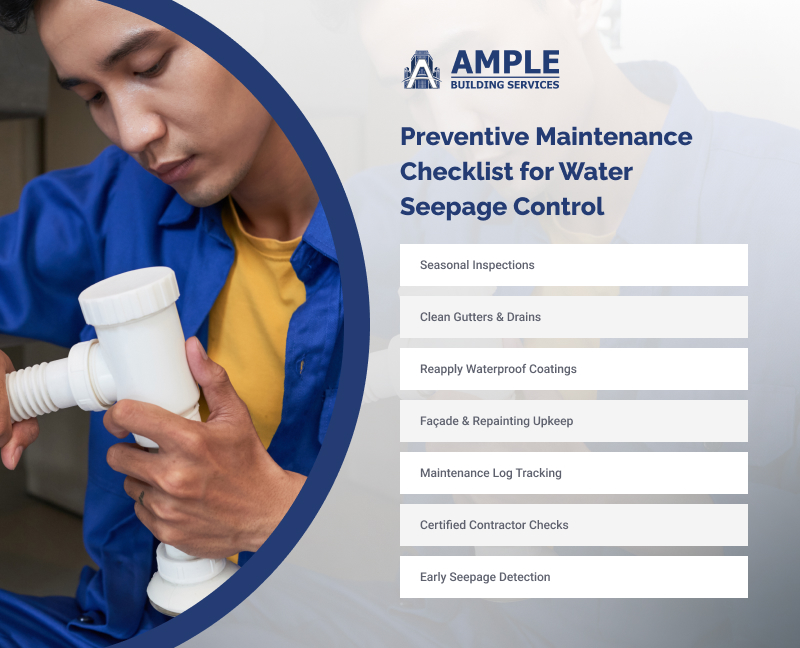
Effective prevention starts with consistent, well-planned upkeep. Routine inspections help detect early signs of water seepage, cracks, or weakened joints before they escalate into structural or safety concerns. These checks are especially crucial before and after Singapore’s monsoon seasons, when increased rainfall places greater strain on roofs, façades, and waterproofing systems.
Gutters, downpipes, and scupper drains should be cleaned regularly to prevent debris build-up. When water accumulates due to blocked drainage, hydrostatic pressure increases, a key contributor to water seepage through walls, ceilings, or concrete slabs. Waterproof coatings on roofs, balconies, planter boxes, and façades must be reapplied periodically, following manufacturer guidelines and the property’s exposure conditions. Repainting and façade maintenance not only enhance aesthetics but also protect exterior surfaces against weathering and long-term moisture intrusion.
Maintaining a detailed log of inspections, findings, and rectification works helps property teams track recurring concerns and allocate budgets more accurately. Engaging certified professionals for periodic checks ensures that membranes, joints, and sealants remain intact, reducing the likelihood of future water seepage incidents.
4.2. Working with Reliable Professionals
Selecting the right contractor is as important as identifying the root cause of water seepage. Working with reputable service providers ensures thorough diagnostics, correct repair methods, and long-lasting results.
Choose BCA-registered and BizSAFE STAR-certified companies to ensure compliance with Singapore’s safety and workmanship standards. Contractors experienced in both residential and commercial projects understand the nuances of multi-storey buildings, common property obligations, and MCST environments.
It is beneficial to engage service providers with integrated, in-house expertise across waterproofing, plumbing, general repairs, and reinstatement. This holistic approach ensures accountability, seamless coordination, and accurate troubleshooting.
Ample Building Services is one such provider, combining decades of experience, skilled tradesmen, and technical capability to diagnose, repair, and prevent water seepage issues across Singapore’s built environment. Their commitment to quality, transparency, and precision workmanship helps property managers achieve reliable long-term solutions.
Before commencing works, always review project references, testimonials, and warranty coverage to evaluate reliability. Professional contractors provide clear quotations, comprehensive scopes of work, and consistent communication throughout the project. Post-repair support and follow-up inspections demonstrate long-term commitment and help prevent the recurrence of water seepage.
Conclusion
Even small signs of water seepage can escalate into serious structural, safety, and health problems if they are not addressed promptly. In Singapore’s humid climate, moisture spreads quickly, making timely inspection and professional intervention crucial to preventing long-term damage.
Effective waterproofing, accurate diagnosis, and consistent maintenance are essential to stopping water seepage at its source and protecting the long-term value of any property. This is especially important for MCSTs and commercial property managers who must ensure safety, compliance, and uninterrupted operations.
With over 40 years of experience, Ample Building Services delivers certified, reliable solutions designed to eliminate water seepage, restore affected structures, and prevent recurrence. Their skilled team combines technical expertise with careful project management to ensure every repair strengthens building durability.
Whether you are managing a condominium, commercial complex, or mixed-use property, addressing water seepage early helps reduce future repair costs, prevent operational disruptions, and safeguard occupant wellbeing. A professional assessment is the most effective way to identify the root cause and implement lasting rectification.
Contact Ample Building Services today to schedule a thorough inspection and protect your property from the risks associated with water seepage.
Frequently Asked Questions
Does water seepage affect the results of a Periodic Façade Inspection (PFI)?
Yes. During a Periodic Façade Inspection (PFI), inspectors look for visible signs of water ingress such as cracks, stains, or efflorescence on external walls. Active seepage or water marks are considered signs of deterioration and may need to be rectified before the building can pass inspection. Persistent seepage can also indicate underlying structural or waterproofing issues that require professional attention. Addressing these problems promptly not only helps ensure compliance with BCA’s façade safety regulations but also prevents costly repeat inspections.
Can water seepage impact building insurance coverage?
Yes, it can. Many insurers in Singapore require that buildings be properly maintained to qualify for water damage claims. If seepage arises due to neglect, outdated waterproofing, or failure to carry out regular inspections, the insurer may reject or limit compensation. Keeping proper maintenance and repair records demonstrates diligence, which strengthens insurance claims. Engaging certified contractors such as Ample Building Services also ensures that all waterproofing and rectification works meet recognised quality and documentation standards.
How can technology help detect or prevent water seepage in buildings?
Modern technology offers property managers practical ways to monitor and prevent water seepage. Moisture sensors and smart building systems can detect abnormal humidity levels, alerting teams before damage becomes visible. Thermal imaging and infrared scanning can identify concealed leaks within walls or ceilings without invasive hacking. For large developments, digital maintenance platforms allow MCSTs to log inspections, track recurring issues, and schedule preventive maintenance efficiently. These innovations help reduce long-term costs and minimise disruption by catching seepage issues early.