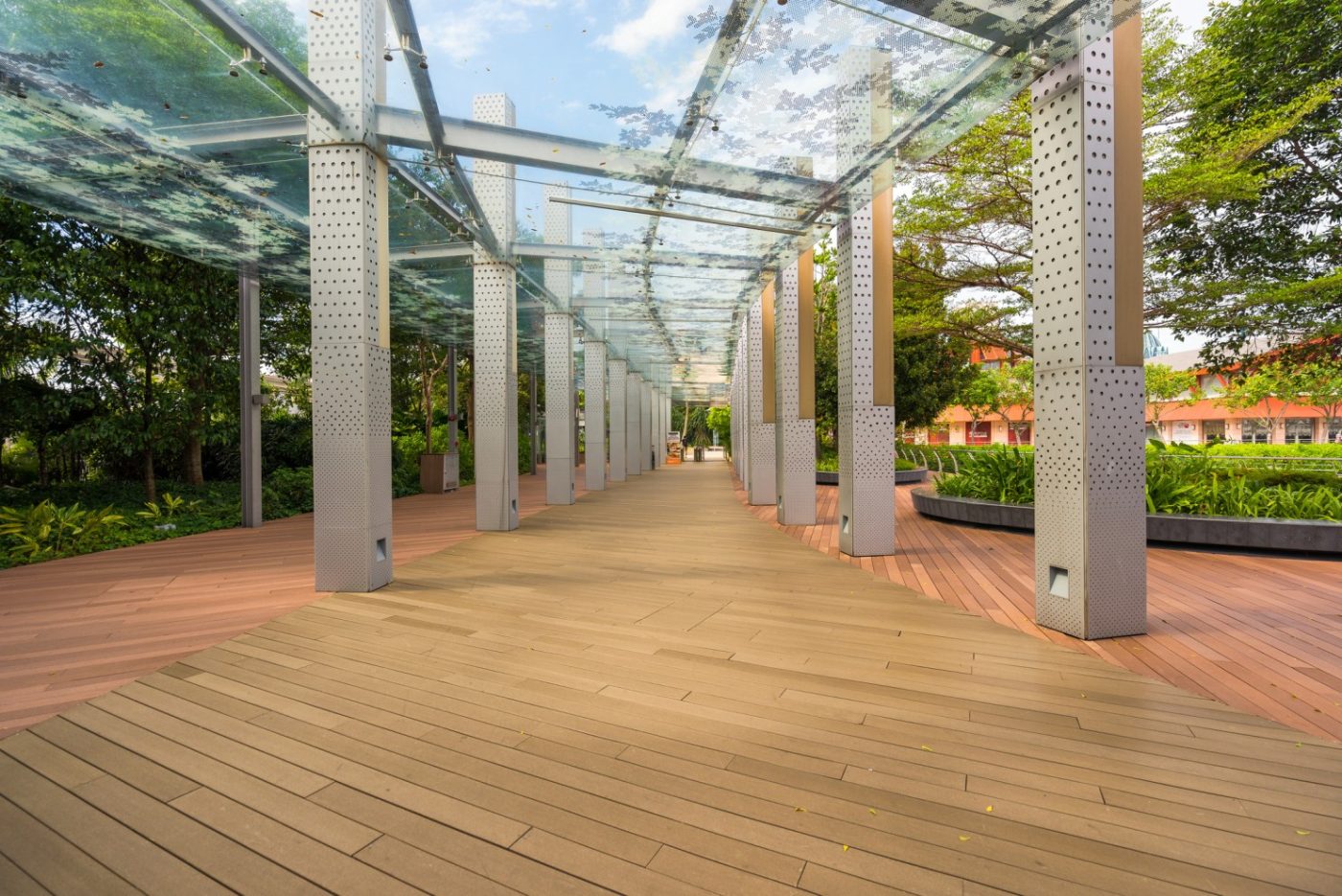
Timber decking in Singapore turns a bare balcony, rooftop, or garden into a warm, usable outdoor room. But our climate is tough on wood: 70% to 95% humidity, daily UV, and sudden monsoon downpours all work against a deck. So the species you pick, how it is installed, and how you maintain it decide whether your deck lasts 5 years or 20. This guide covers the popular timber types, real installation costs, and the upkeep that keeps a deck alive, from a contractor who installs and repairs them.
Why choose timber decking in Singapore?
Real timber has a warmth and a cooler barefoot feel that composite struggles to match, which is why it stays popular for landed gardens, condo balconies, rooftop terraces, and pool surrounds. It also has deep local roots: chengal has been used here for generations, from old jetties to the timber boardwalks Singaporeans walk on at MacRitchie Reservoir and HortPark. The trade-off is honest: natural wood is beautiful but greys, cracks, and rots faster in our heat and rain if neglected.
Popular timber decking types in Singapore
Most decks here use tropical hardwoods chosen for hardness and weather resistance. Here is how the common choices compare.
| Species | Look and feel | Durability | Cost (installed, per sq ft) |
| Chengal | Golden-brown, the local classic | Very high | $15 to $25 |
| Balau | Reddish-brown, great value | High | $12 to $20 |
| Merbau | Rich red-brown, very stable | High | $13 to $22 |
| Ironwood (Belian) | Dark, extremely hard | Very high | $15 to $25 |
| Teak | Premium, oily, refined | Very high | $20 to $35 |
Chengal and balau are the everyday workhorses. Merbau is prized for stability but can bleed reddish tannins onto light surfaces when new. Teak is the luxury option. Whatever you choose, buy from a supplier who can confirm the grade.
Composite decking vs timber decking
The composite decking vs timber decking question comes down to upkeep versus feel. Composite (WPC) boards mix wood fibre and plastic, so they never need oiling and won’t splinter or rot. Natural timber looks and feels better and stays cooler, but demands regular care.
| Factor | Timber decking | Composite decking |
| Maintenance | Re-oil every 6 to 12 months | Wash occasionally |
| Surface heat in sun | Cooler underfoot | Hotter in direct sun |
| Lifespan | 15 to 20+ years if maintained | 20 to 25 years |
| Feel and look | Natural, ages to a patina | Uniform, slightly synthetic |
| Upfront cost | Lower to mid | Higher |
In short: choose timber for barefoot pool decks and shaded areas, and consider composite for high-sun balconies where you want low maintenance.
Timber decking installation cost in Singapore
The timber decking installation cost is usually quoted per square foot installed, and it covers more than just the boards. A proper quote includes the decking timber, the subframe (joists and pedestals), fasteners, labour, and disposal of any old decking. For most homes, expect a realistic project range once you factor these in, with the species being the biggest single variable.
What pushes the timber decking installation cost up:
- Larger or awkwardly shaped areas
- Premium species like teak
- Difficult access (high-floor condos versus a landed garden)
- Whether waterproofing or substrate levelling is needed underneath
- Extras such as steps, railings, planter edging, or lighting
Outdoor timber decking: balconies, rooftops, and pools
Where the deck goes changes everything. For a condo balcony, clear the works with your MCST, and for HDB units check what is allowed first, since balcony works can affect drainage and waterproofing. Rooftop and PES terraces carry their own weight and drainage rules. Around pools, timber wins on barefoot comfort but must stay sealed and splinter-free, which pairs naturally with regular pool maintenance.
Getting the substrate and waterproofing right
This is where most balcony and rooftop decks fail. Timber laid over a balcony or roof slab sits on top of the building’s waterproofing, so the membrane and the drainage falls must be sound first, or water gets trapped under the boards and rots both the deck and the slab. The substrate should be checked and made good before any decking goes down, and for roof terraces a proper rooftop waterproofing system is essential. If you are still weighing surfaces, other outdoor flooring like a slip-resistant pebble wash finish may suit high-traffic or wet zones better.
Timber decking maintenance and repair
Timber decking maintenance is simple but non-negotiable here. Re-oil every 6 to 12 months to feed the wood and slow greying, wash off algae and mould before the surface turns slippery, and keep the gaps clear so water drains and air circulates. Check board ends and joints, where rot starts, and watch for termites on softer timbers. The upside: a greyed deck can usually be sanded back and re-oiled to look new, and individual rotten boards can be replaced without redoing the whole deck, far cheaper than a full rebuild.
How Ample Build handles timber decking
Ample Build is an experienced building maintenance and repair contractor, and we treat decking as a whole system, not just planks. We supply and install timber decking, sort out the waterproofing and substrate beneath it, and come back to maintain, sand, re-oil, or repair it as it ages. Having replaced timber decking on Singapore rooftops and pool areas, our team knows what the climate does to an unprotected deck.
For homeowners, MCSTs, and commercial clients who want one dependable flooring contractor in Singapore to handle timber, tiling, and outdoor surfaces together, that single-team approach saves both cost and coordination. Contact our team for a site assessment and quote.
Timber decking in Singapore FAQs
How long does timber decking last in Singapore?
A well-chosen, well-maintained hardwood deck lasts 15 to 20 years or more. Skip the oiling and cleaning, and you can halve that.
Chengal, balau, or merbau, which is best?
Chengal is the durable all-rounder, balau offers the best value, and merbau is very stable but can bleed tannins when new. All three suit our climate.
Does timber decking need waterproofing underneath?
On balconies and rooftops, yes. The slab’s waterproofing must be sound before decking goes on, or trapped water will rot the deck and damage the structure.
How often should I oil my deck?
Every 6 to 12 months in Singapore. High-sun and poolside decks are at the shorter end.
Timber or composite for a pool deck?
Timber is cooler and nicer barefoot; composite is lower-maintenance but hotter in direct sun. Both work if installed and sealed correctly.
Can I install timber decking on an HDB balcony?
Sometimes, but check HDB’s rules first, as balcony works can affect drainage and waterproofing. Condo owners should get MCST approval.
Quick answer:
Timber decking in Singapore uses tropical hardwoods like chengal, balau, and merbau, costing roughly $12 to $35 per sq ft installed depending on species. It needs re-oiling every 6 to 12 months in our climate. Composite decking costs more upfront and runs hotter underfoot, but needs far less maintenance. The right pick depends on your location, budget, and how much upkeep you want.