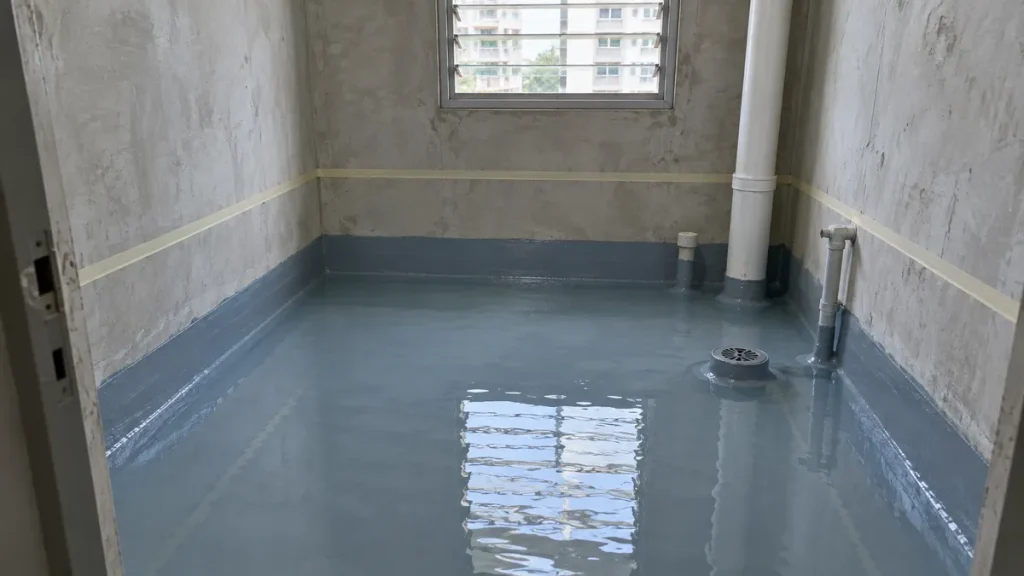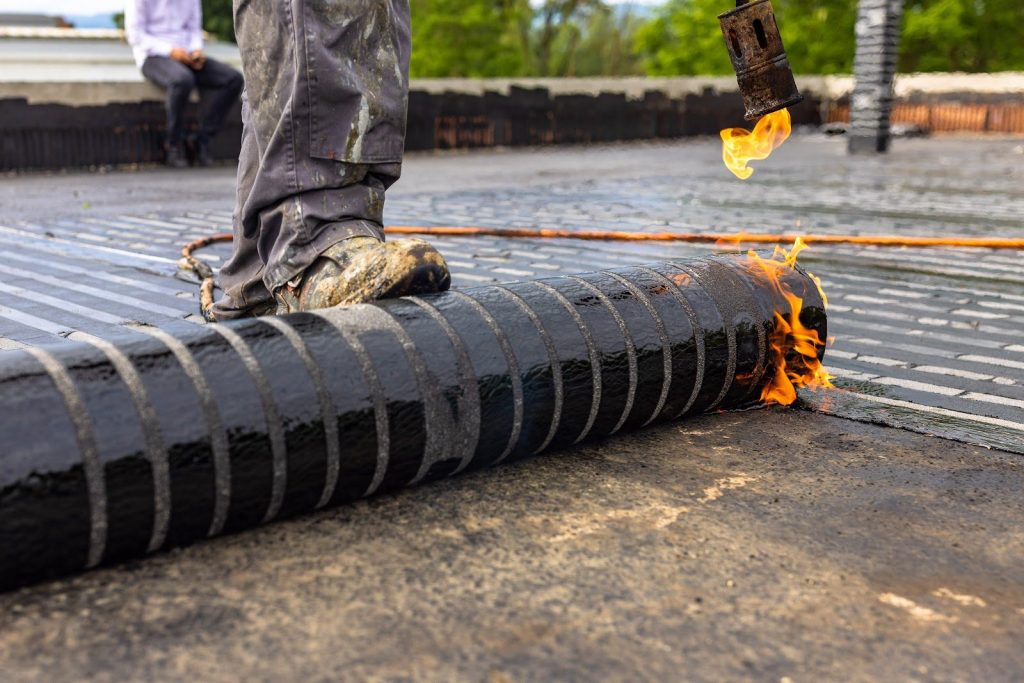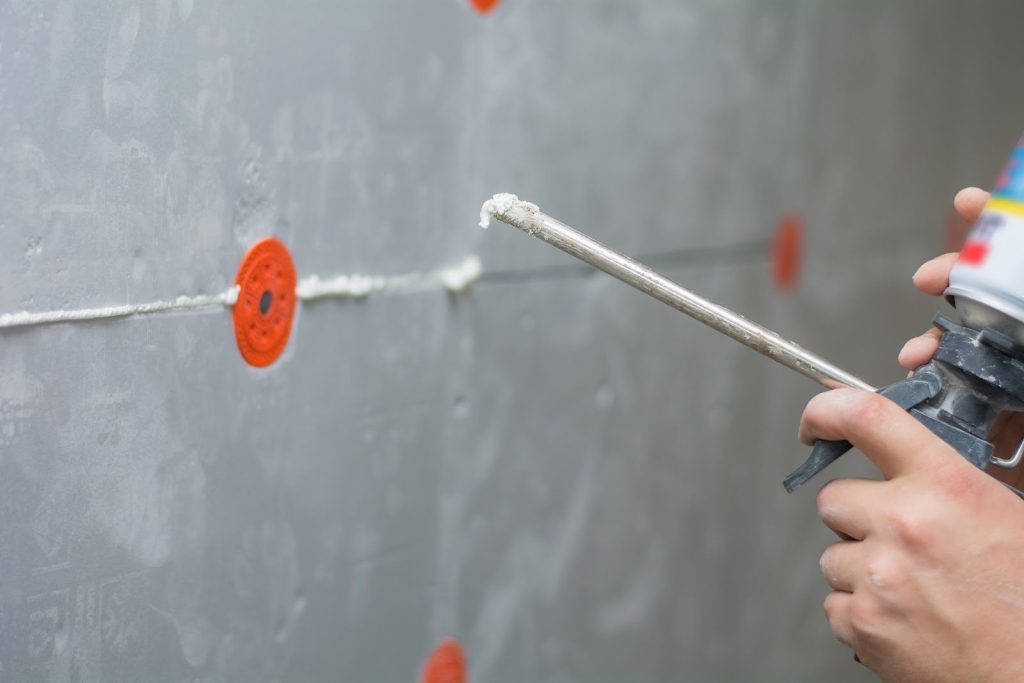
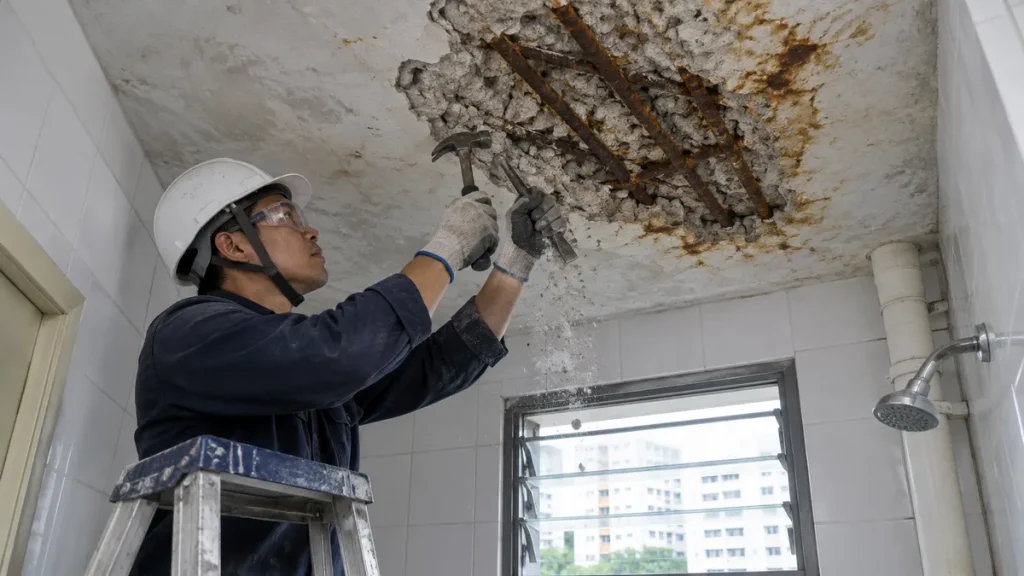
When concrete drops from a bathroom ceiling or a balcony soffit shows rust-brown cracks, owners ask us: why, is it dangerous, and how should it be fixed? Spalling concrete is the visible end of corrosion inside the slab, and the answers depend on what started it and where the damage sits. Here our team explains how we tell carbonation from chloride attack, separate cosmetic from structural damage, and sequence the repair so it lasts, whether in an HDB flat in Tampines, an East Coast condo or a Tuas factory.
Key Takeaways
- Most spalling concrete in Singapore homes comes from carbonation in damp toilets and kitchens.
- Chloride attack near the coast is faster, more localised and harder to spot.
- Shallow ceiling spalls can be patched.
- Spalls in beams, columns or with heavy steel loss need an engineer before any spalling concrete repair Singapore contractors carry out.
What causes spalling concrete in Singapore buildings?
Spalling concrete happens when the steel bars inside rust, swell and push off the concrete cover. Steel stays protected while the concrete is highly alkaline; once that protection is lost, moisture and oxygen do the rest. HDB states that spalling in flats “is largely caused by carbonation”, and that damp areas such as kitchens and toilets are the most affected (HDB Home Care Guide). On site, we most often find thin cover, unsealed old drilled holes, shower steam with poor ventilation, and water seeping from a failed membrane above, which is why spalling and water leakage Singapore owners report so often share the same toilet ceiling.
Carbonation or chloride: which one is attacking your concrete?
Carbonation is slow and spreads over wide areas; chloride attack is fast, localised and can eat deep into a bar with little warning. Which one you have decides how much we break out and whether an engineer should test first.
| Factor | Carbonation | Chloride attack |
|---|---|---|
| How it starts | Carbon dioxide from the air lowers the concrete’s alkalinity from about pH 13 to about pH 9 | Chloride ions reach the steel and break its protection, even in alkaline concrete |
| Where we usually see it | Toilet and kitchen ceilings, low-cover slabs, older HDB blocks and walk-up flats | Sea-facing facades, coastal and marine structures, buildings near the shoreline |
| Damage pattern | General rusting over a large area, cracks running along the bars | Pitting: deep, local loss of steel, sometimes with little visible cracking |
| Typical steel loss | About 0.02 to 0.2 mm per year | About 1 to 10 mm per year |
| What gets checked | Depth of carbonation on a fresh break-out, using an indicator spray | Chloride content of drilled dust samples, tested in a laboratory |
Sika’s Total Corrosion Management review puts carbonation steel loss at 2/100 to 2/10 mm a year against 1 to 10 mm a year for chloride pitting, so a small spall on a seaside block deserves more attention than its size suggests.
“Sudden collapse of structures due to local loss of reinforcement cross section without prior signs may happen.” – Sika Services AG, Total Corrosion Management report, on chloride-induced corrosion
Is spalling concrete cosmetic or structural?
Spalling concrete is usually cosmetic when it is shallow, on a ceiling slab or non-load-bearing wall, with light rust that cleans back to sound steel. Get a structural assessment first when you see:
- Spalls on beams, columns, balcony cantilevers or staircases.
- Bars that are visibly thinner, pitted or snapped.
- Cracks along several bars, sagging, or hollow-sounding concrete over a wide area.
- Spalling flagged in a periodic structural inspection report.
MAPEI’s repair guidance says to consult a structural engineer when the bar section is significantly reduced, with about 20% loss as a typical limit (MAPEI).
What is the correct spalling concrete repair sequence?
Stop the water, cut back to sound concrete, clean and protect the steel, rebuild, then cure and seal. Skipping or reordering steps is the main reason patches crack again.
- Find and stop the moisture source. Fix the failed membrane, roof or pipe above first with proper water leakage solutions, or the patch is fed by the same water.
- Sound and break out. We hammer-test, mark hollow zones and break out to sound concrete, behind the bars.
- Clean the steel. Remove rust to clean metal; replace or add bars where the engineer’s limit is exceeded.
- Protect and prime. HDB’s guide describes two coats of anti-rust paint on the steel and a bonding agent before patching.
- Rebuild. Place polymer-modified repair mortar in layers.
- Cure and finish. Cure as the maker specifies (MAPEI cites seven days), then paint or apply an anti-carbonation coating.
Patching only the visible spall can start new corrosion beside it, which Sika calls the “incipient anode” or halo effect. That is why we break out the full hollow area; our article on why spalling concrete repairs keep failing covers other causes.
Who is responsible for spalling concrete: HDB, MCST or the owner?
Inside an HDB flat, the owner is responsible. HDB says “you are responsible for the prevention of any spalling concrete in your flat”. Common property is handled by the Town Council, or the MCST in a condo. New flats carry a 10-year spalling warranty, per HDB’s My Nice Home maintenance guide. BCA requires a periodic structural inspection every 10 years for residential and every 5 years for non-residential buildings, with the owner or MCST appointing a Structural Engineer; landed homes used only as residences are exempt (BCA). Recommended repairs must be done within the given timeframe; see our guide to what owners miss in a periodic structural inspection.
When does the repair need an engineer or PE endorsement?
An engineer should specify the repair when a structural member is affected, steel must be replaced, or the defect comes from a PSI report; a shallow ceiling patch usually does not need one. For larger works, the engineer’s design and any PE endorsement come before hacking. Our guide on PE endorsement in Singapore explains when you need one. For spalling concrete repair Singapore MCSTs schedule after a PSI, we work from the engineer’s drawings and photo-record each location.
How Ample Build handles spalling concrete
Ample Build is a BCA-registered, bizSAFE Star contractor whose in-house team handles spalling concrete from inspection to final coat, including rectification from PSI reports through our PSI/PFI rectification service. If water leakage Singapore buildings face is feeding the spall, we fix it in the same job, so you pay for one dependable repair instead of repeat patches. Contact our team for a site inspection and an itemised quote.
Frequently Asked Questions
Is spalling concrete dangerous?
It can be. Falling pieces can injure people and damage property, and spalling on beams or columns can weaken the structure. Have it assessed early.
Can I repair spalling concrete myself?
HDB’s guide covers DIY steps for small ceiling areas, but it advises engaging a contractor for larger areas. Spalls on structural members need professional assessment.
Will repainting the ceiling stop spalling concrete?
Regular repainting helps protect against carbonation, but it will not stop corrosion that has already started. Existing spalls need to be broken out and repaired.
Why does spalling concrete come back after repair?
Usually because the water source was not fixed, the hollow area was not fully broken out, or the steel was not cleaned and protected before patching.
Does every spalling concrete repair need PE endorsement?
No. Small cosmetic patches usually do not, but repairs to structural members or works arising from a PSI report are typically specified by an engineer.